

During an aircon chemical wash in Singapore, the coil, blower and drainage system are cleaned as separate parts of the indoor unit, each with a specific purpose. The process is more detailed than routine surface cleaning because the technician needs to remove built-up dust, grime and residue from areas that affect airflow, cooling performance and water drainage. Understanding what happens to each component helps homeowners and property owners know what a proper chemical wash should include.
Why these three parts matter during a chemical wash
The coil, blower and drainage system are among the most important areas inside a split air conditioner. The coil handles heat exchange, the blower pushes cooled air into the room, and the drainage system carries away condensed water. If any one of these parts is dirty or blocked, the unit may cool less effectively, drip water or smell stale.
A chemical wash is designed to clean these internal components more thoroughly than basic aircon servicing. It is commonly requested in Singapore when a unit has visible dirt, reduced airflow, light water leakage or a build-up of dust that cannot be removed with simple filter cleaning alone.
How the coil is cleaned during the wash
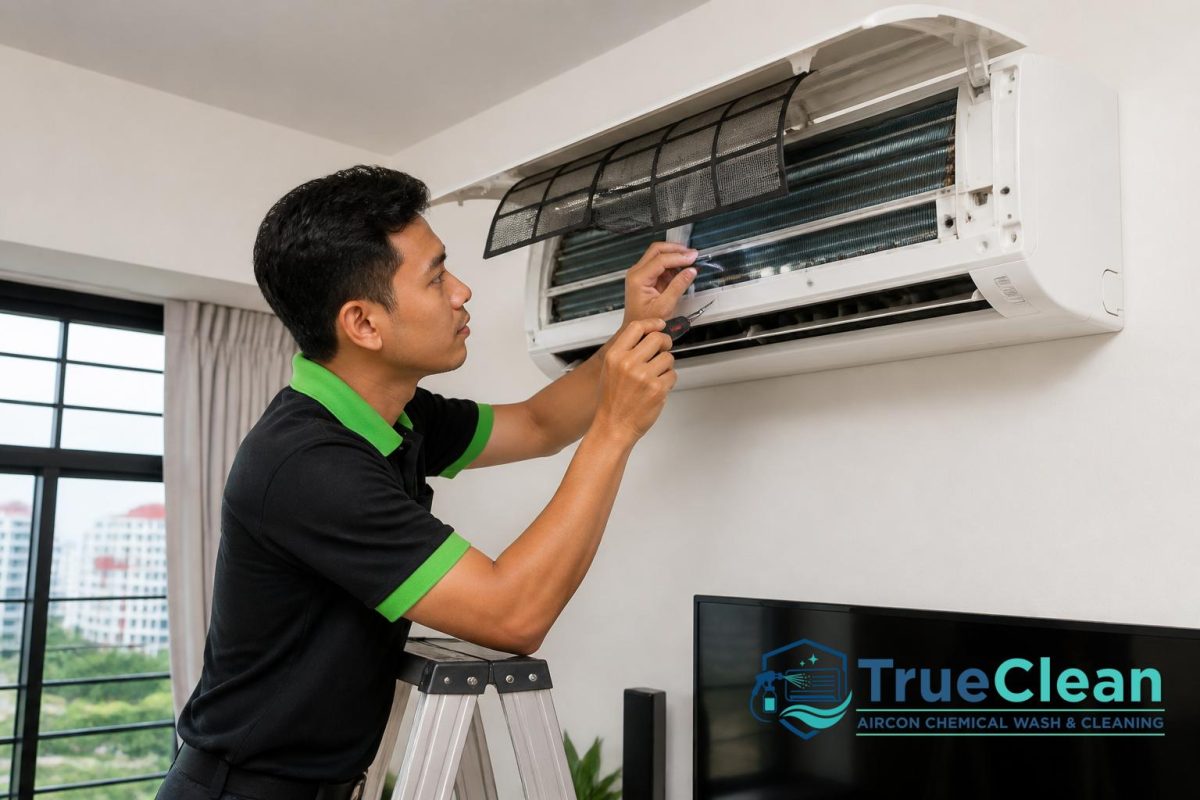
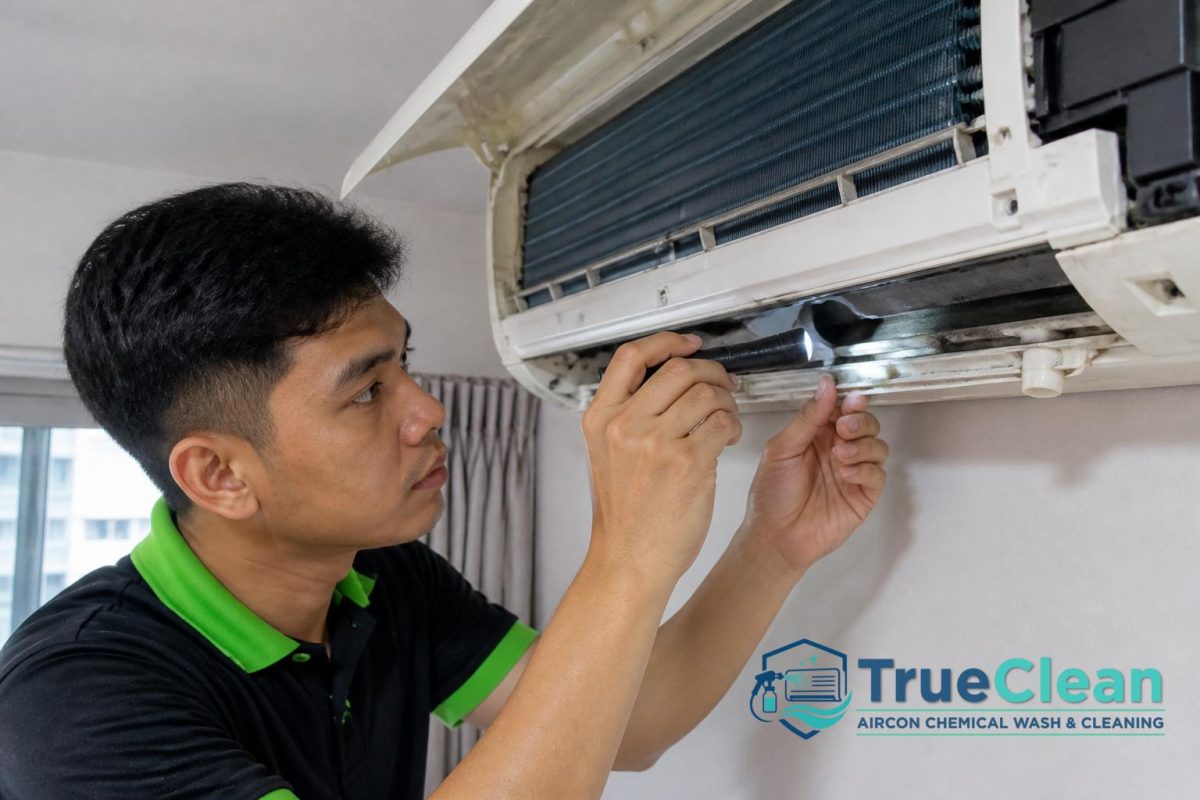
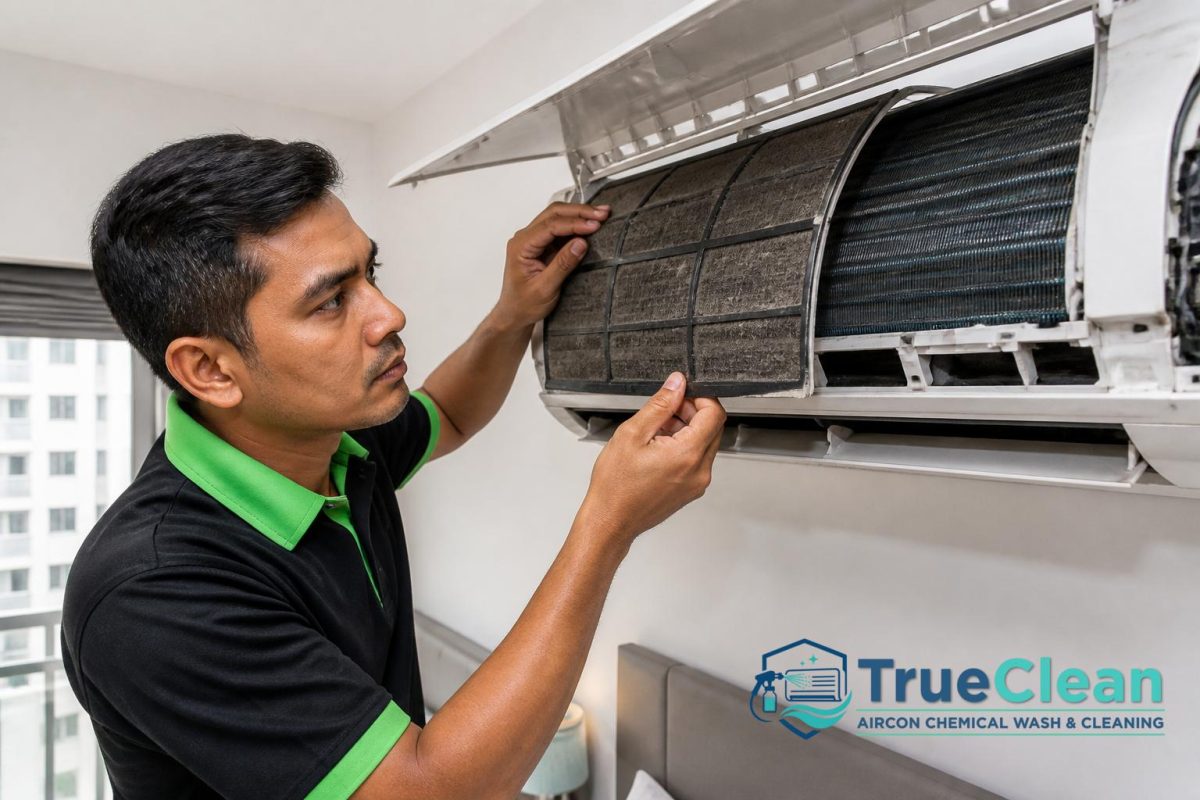
The coil, often called the evaporator coil in the indoor unit, is usually one of the first areas attended to. Once the casing and accessible parts are opened, the technician can expose the finned coil surface. This area is delicate, so the cleaning method needs to be controlled and careful rather than forceful.
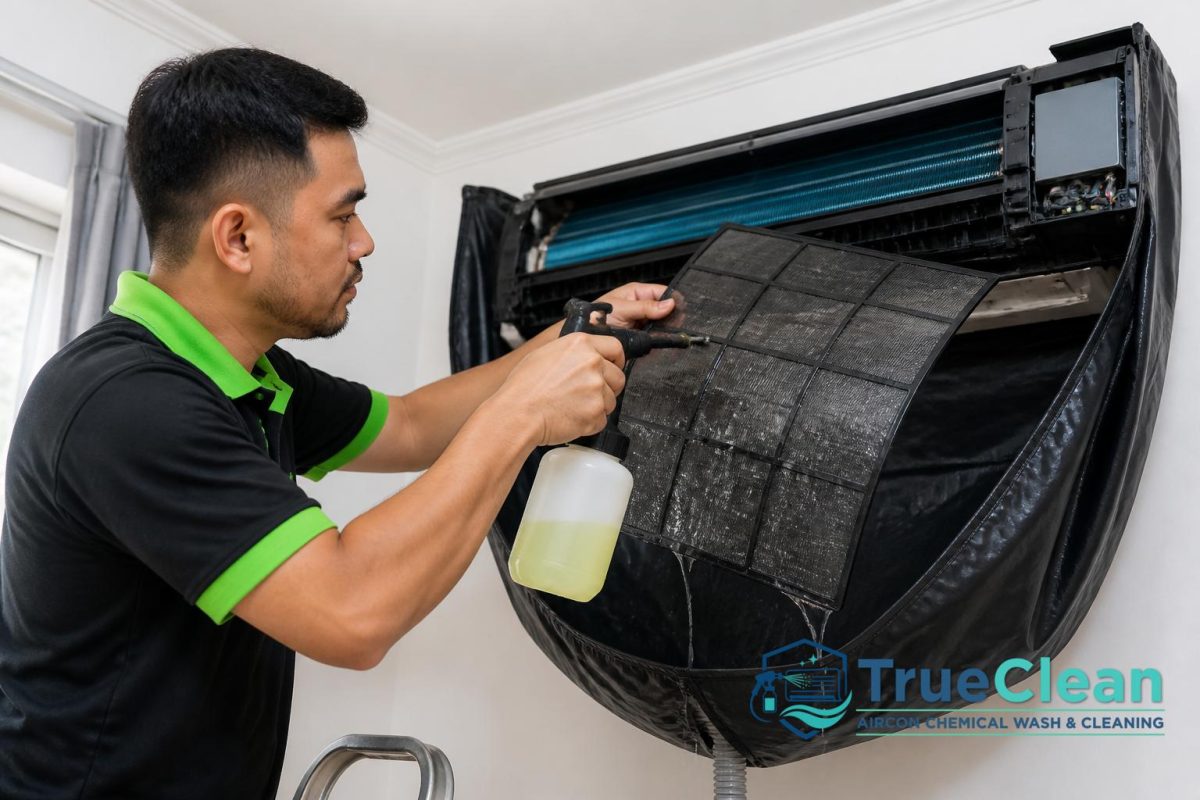
In a chemical wash, the coil is typically treated with a suitable cleaning solution that helps loosen grime, dust and some light residue stuck between the fins. The solution is left to work for a short period before the coil is rinsed or flushed in a way that removes the loosened dirt. The goal is to improve cleanliness without bending the fins or leaving excess chemical behind.
Because the coil has many narrow spaces, the cleaning is not just about making it look clean. A proper wash should also allow air to pass more freely through the fins, which supports more even cooling and reduces strain on the unit.
What happens to the blower during chemical cleaning
The blower is the rotating cylindrical fan that pushes air across the coil and into the room. It can collect dust along its blades and within the grooves of the fan wheel. Over time, this build-up can reduce airflow and contribute to unpleasant odours, especially in units used frequently in Singapore’s humid climate.
During a chemical wash, the blower is usually accessed after the indoor unit is opened and protected appropriately. The technician may apply cleaning solution to break down dirt on the fan wheel, then remove the loosened residue with brushing, wiping or rinsing, depending on the unit design and the service method used. The aim is to clean the surfaces where dust commonly sticks without damaging the motor or surrounding electrical parts.
This part of the process matters because the blower is directly responsible for distributing air. If it is coated with grime, the aircon may still run, but the airflow can feel weaker and less consistent.
How the drainage system is cleared and checked
The drainage system carries condensation from the indoor unit to the drain outlet. If it becomes partially blocked by slime, dust or residue, water may overflow into the casing and drip from the unit. In Singapore, where air conditioners are used often, drainage issues are a common reason for service requests.
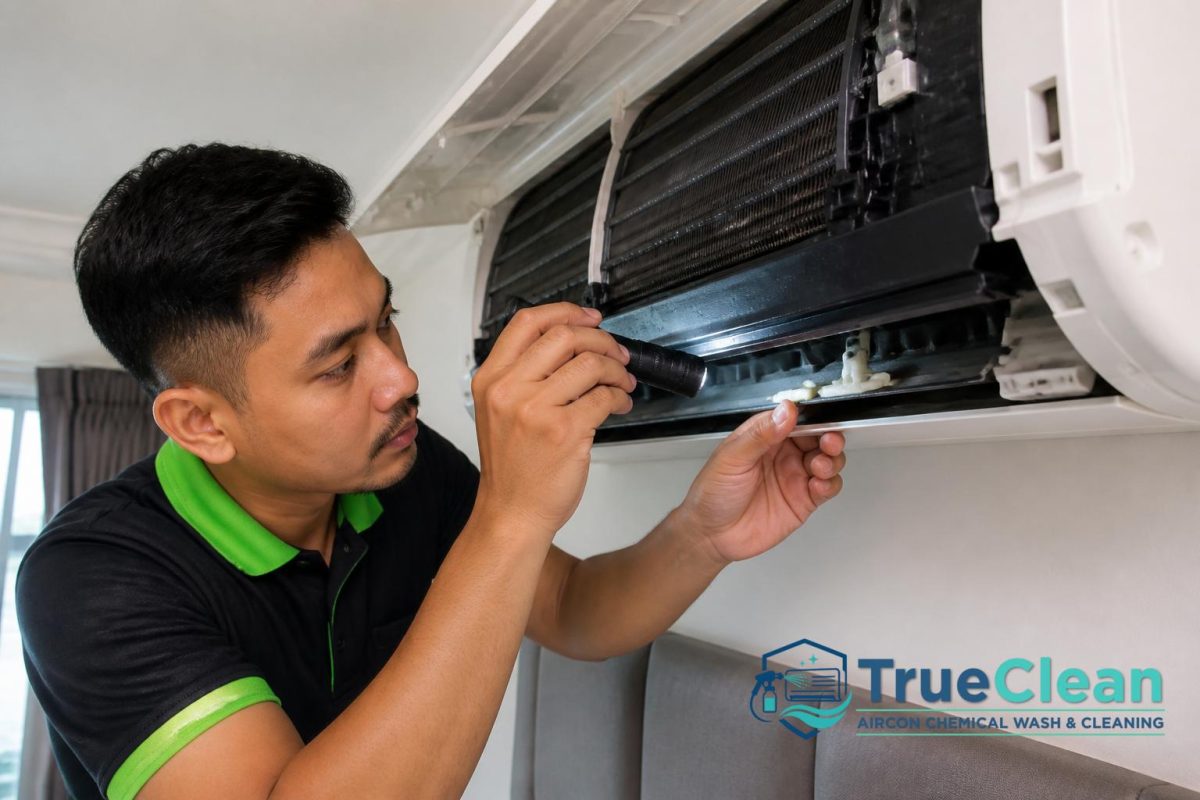
During a chemical wash, the drain pan and drain line are usually cleaned by flushing out accumulated dirt and checking that water can flow out smoothly. The technician may remove visible debris from the drain pan, then run water through the line to see whether it is draining properly. This helps reduce the chance of leftover sludge staying in the pipe.
It is also common for the technician to observe whether the unit has any signs of slow drainage, such as standing water in the tray or residue near the outlet. While a chemical wash can help clear many minor blockages, a severely clogged drainage line may need additional attention depending on the condition of the system.
Why a chemical wash is more detailed than routine cleaning
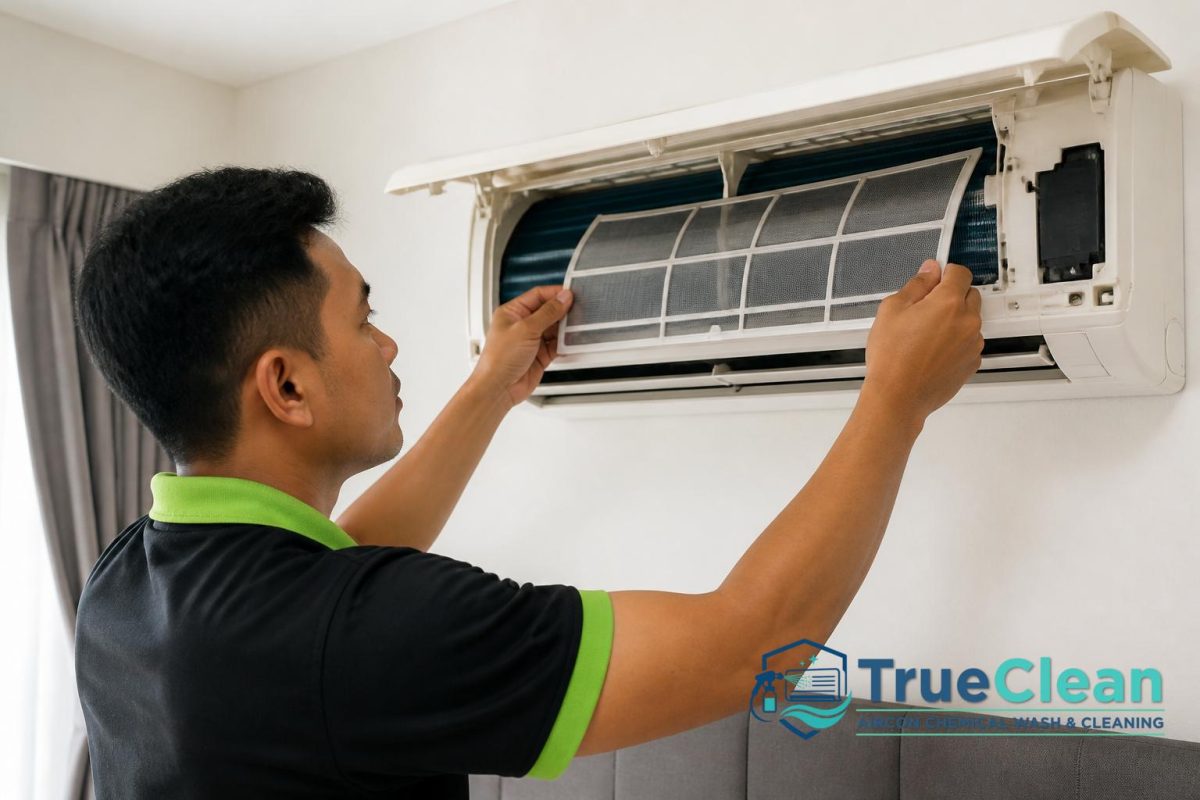
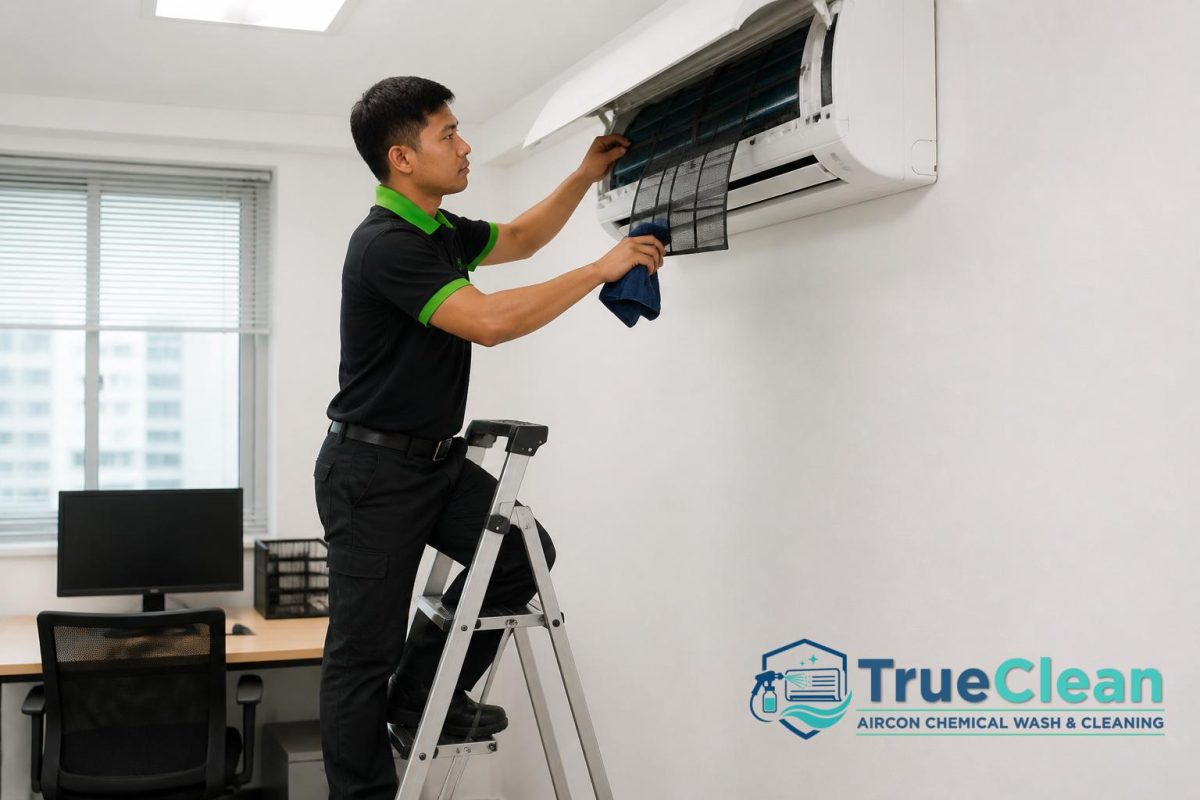
Routine aircon cleaning usually focuses on accessible areas such as the filters, exterior casing and basic visual checks. A chemical wash goes further by opening the unit and treating internal parts that collect dirt over time. That is why the coil, blower and drainage system are all cleaned as part of the same service.
This deeper approach is useful when a unit has been used heavily, has not been cleaned for some time or shows signs such as weak airflow, stale smells or minor leaking. However, it should still be understood as a cleaning process, not a repair service. It helps improve cleanliness and function, but it does not replace part replacement or fault diagnosis if there is a mechanical issue.
What a careful technician should pay attention to
During an aircon chemical wash, proper handling matters as much as the cleaning itself. The technician should protect electrical components, avoid oversaturating sensitive areas and use cleaning methods that suit the condition of the unit. Not every air conditioner will require the same level of treatment.
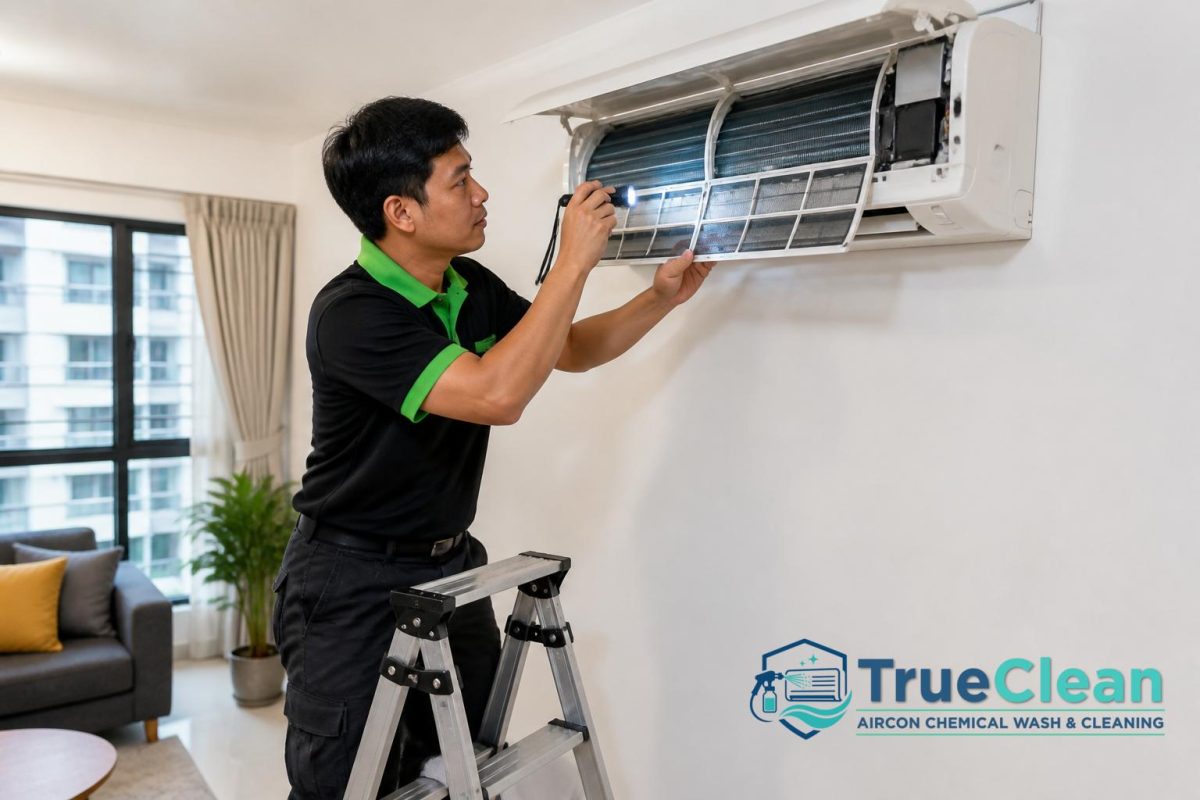
It is also sensible for the technician to check the condition of the coil fins, blower wheel and drain path before and after cleaning. This allows them to see whether the parts were heavily soiled, whether the drainage was flowing normally and whether there are signs that a deeper service may be needed later.
A good chemical wash should leave the unit cleaner and more functional, but it should still be performed with care so that the indoor unit is not damaged in the process.
Signs the coil, blower or drainage system may need this service
There are a few practical signs that these components may benefit from a chemical wash rather than a lighter clean. These include reduced airflow, uneven cooling, visible dirt around the vents, musty odours when the unit starts up and water dripping from the indoor unit.
In Singapore homes, especially HDB flats, condominiums and landed properties where the aircon is used regularly, these signs often appear gradually. Many people only notice the issue once the airflow feels weaker or the unit begins to leak. At that point, cleaning the coil, blower and drainage system can help restore the unit’s condition more effectively than external wiping alone.
If you would like to understand the scope of an aircon chemical wash for your unit, you can WhatsApp TrueClean Aircon Chemical Wash & Cleaning Singapore to discuss the condition of the aircon, the service scope, your property type and your preferred schedule before requesting a quotation: message us here.
Conclusion
In an aircon chemical wash, the coil, blower and drainage system are cleaned because each one plays a different role in cooling and water removal. The coil is treated to remove grime from the heat exchange area, the blower is cleaned to support airflow, and the drainage system is flushed to help condensation leave the unit properly. When these parts are cleaned carefully and in the right sequence, the service is more thorough and practical for Singapore’s climate and everyday aircon use.
Choose TrueClean Aircon Chemical Wash & Cleaning Singapore
TrueClean Aircon Chemical Wash & Cleaning Singapore is a specialist provider of aircon chemical wash, aircon chemical cleaning, and aircon chemical overhaul services in Singapore. Over time, internal aircon components can become clogged with dust, dirt, mould, and other contaminants, resulting in weaker cooling performance, water leaks, unpleasant smells, and higher energy consumption. Our chemical cleaning services are designed to thoroughly clean critical components within the air conditioning system and help restore efficient operation.
Beyond chemical cleaning solutions, we also offer aircon servicing, aircon maintenance, and aircon cleaning for homeowners, landlords, offices, and commercial premises. Whether you require regular maintenance to keep your system in good condition or a more extensive chemical overhaul for heavily used units, our team will recommend a suitable solution based on your aircon’s condition. At TrueClean Aircon Chemical Wash & Cleaning Singapore, we are committed to providing professional service, transparent recommendations, and dependable workmanship for all your air conditioning needs. WhatsApp us at +65 8241 0032 today!
Frequently Asked Questions
Does a chemical wash clean the coil more thoroughly than routine servicing?
Yes. Routine servicing usually focuses on accessible parts such as filters and surface cleaning, while a chemical wash is designed to clean internal areas like the coil more deeply. It is typically chosen when dirt build-up is more noticeable or when the unit needs a more detailed internal clean.
Will the blower always be removed during a chemical wash?
Not always. The exact method depends on the unit type, condition and the technician’s approach. In many cases, the blower is cleaned in place after the unit is opened, while still allowing the dirt on the fan wheel to be loosened and removed carefully.
Can a chemical wash fix a leaking aircon?
A chemical wash may help if the leak is caused by a dirty or partially blocked drainage system, but it will not solve every leakage problem. If the issue is due to a damaged part, incorrect installation or a more serious fault, additional diagnosis or repair may be needed.