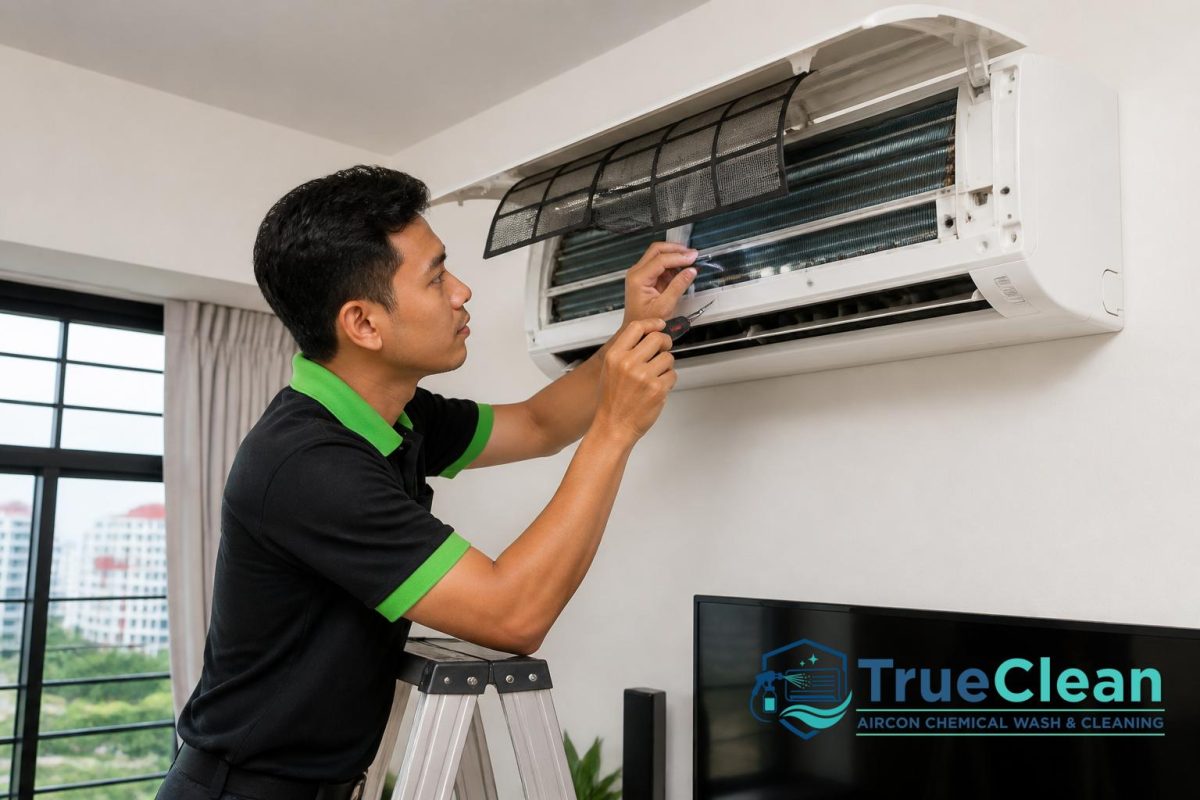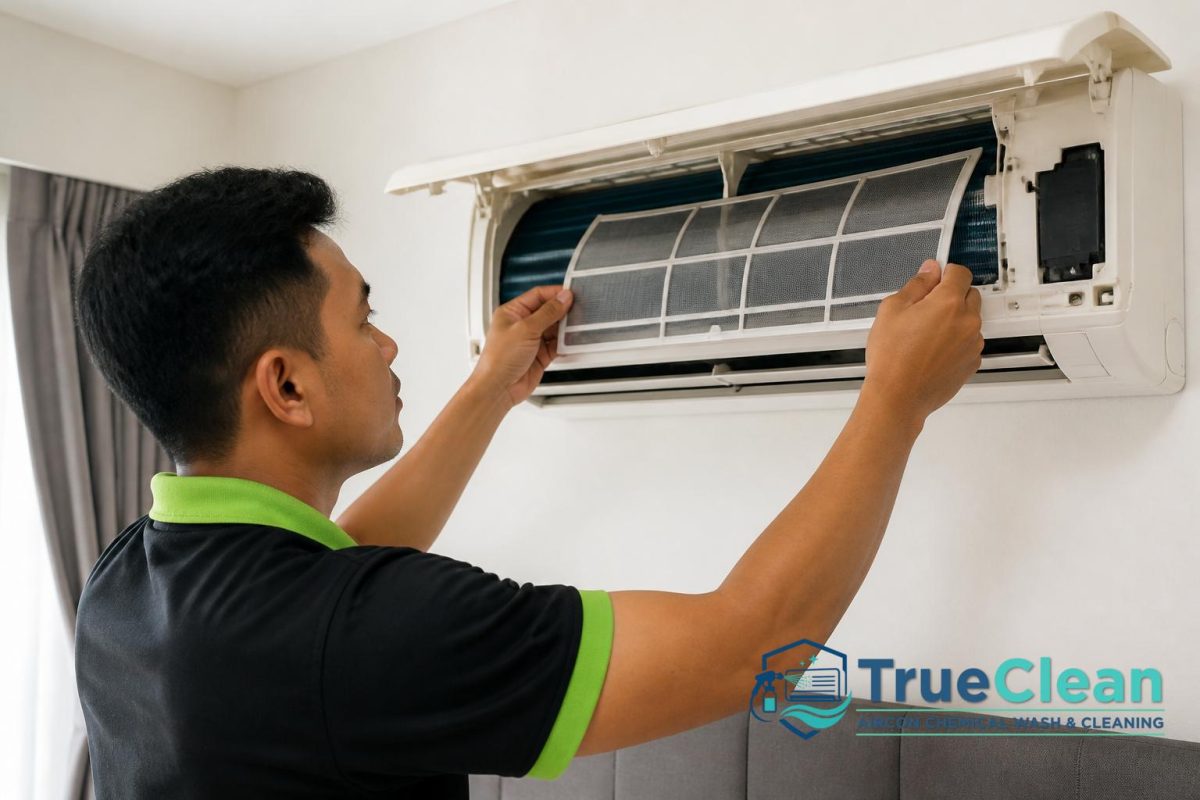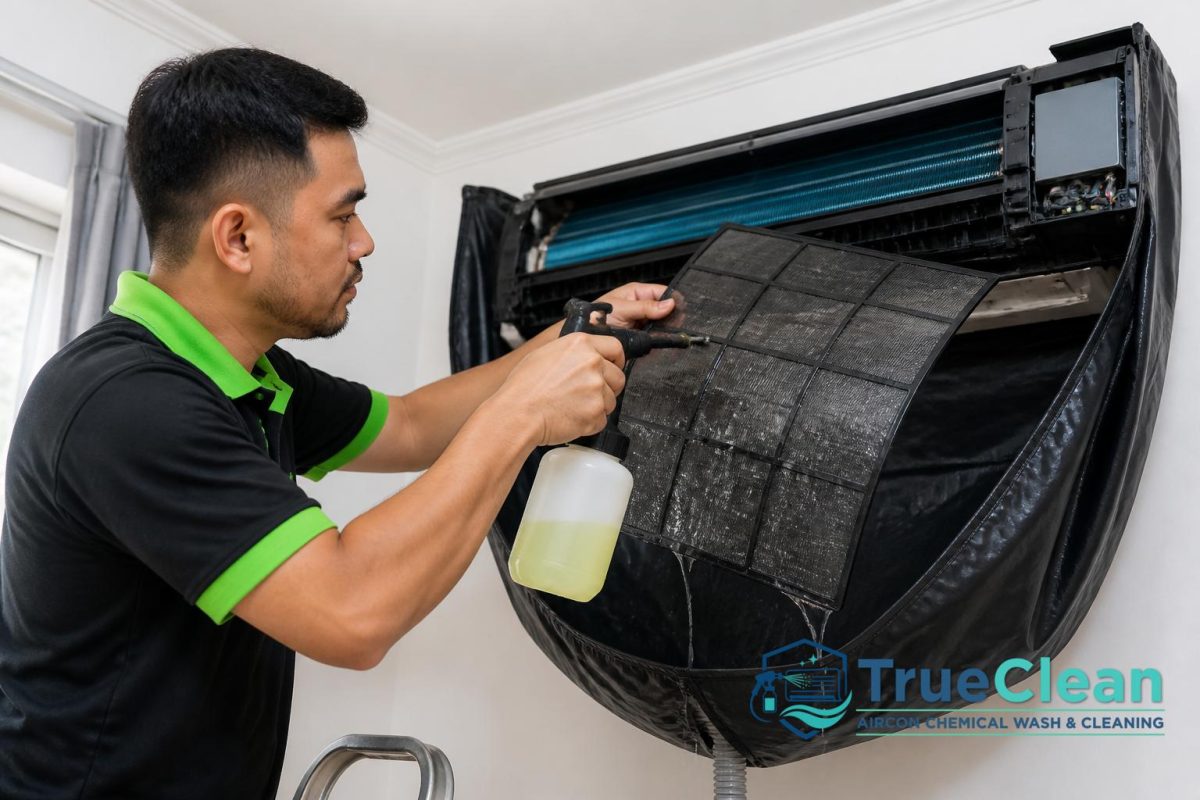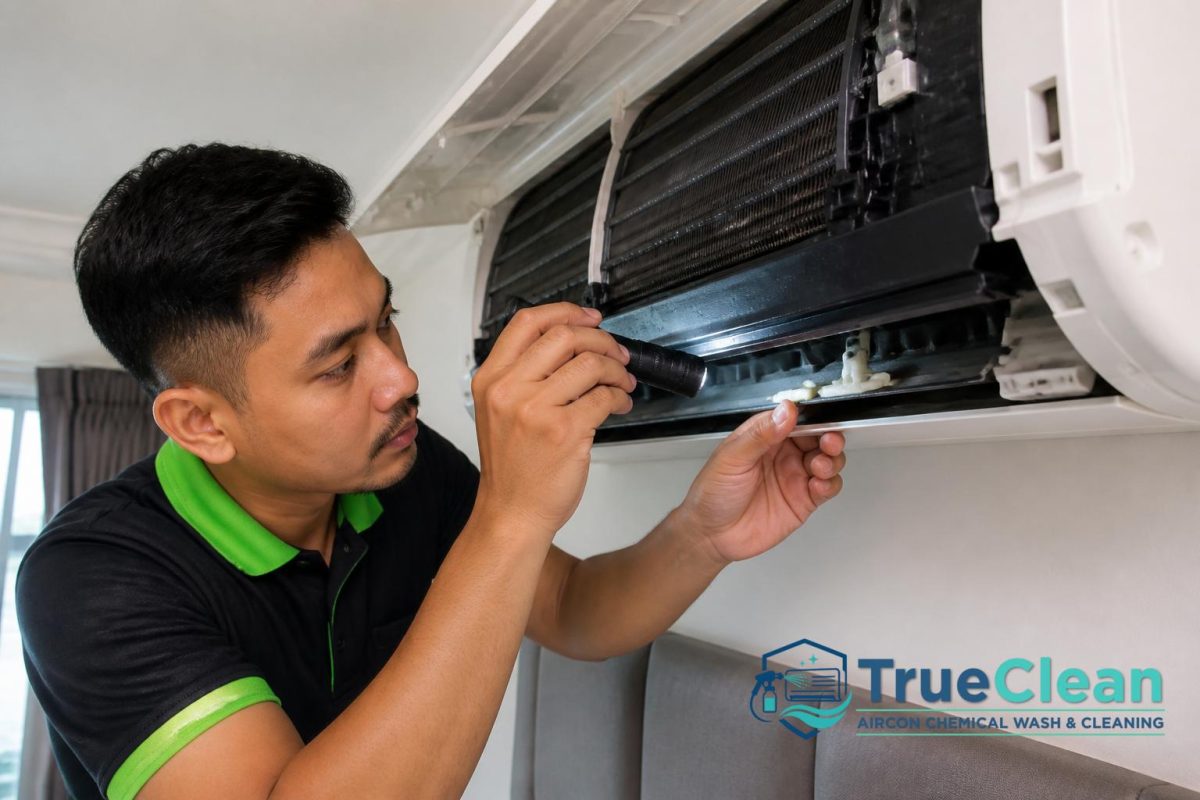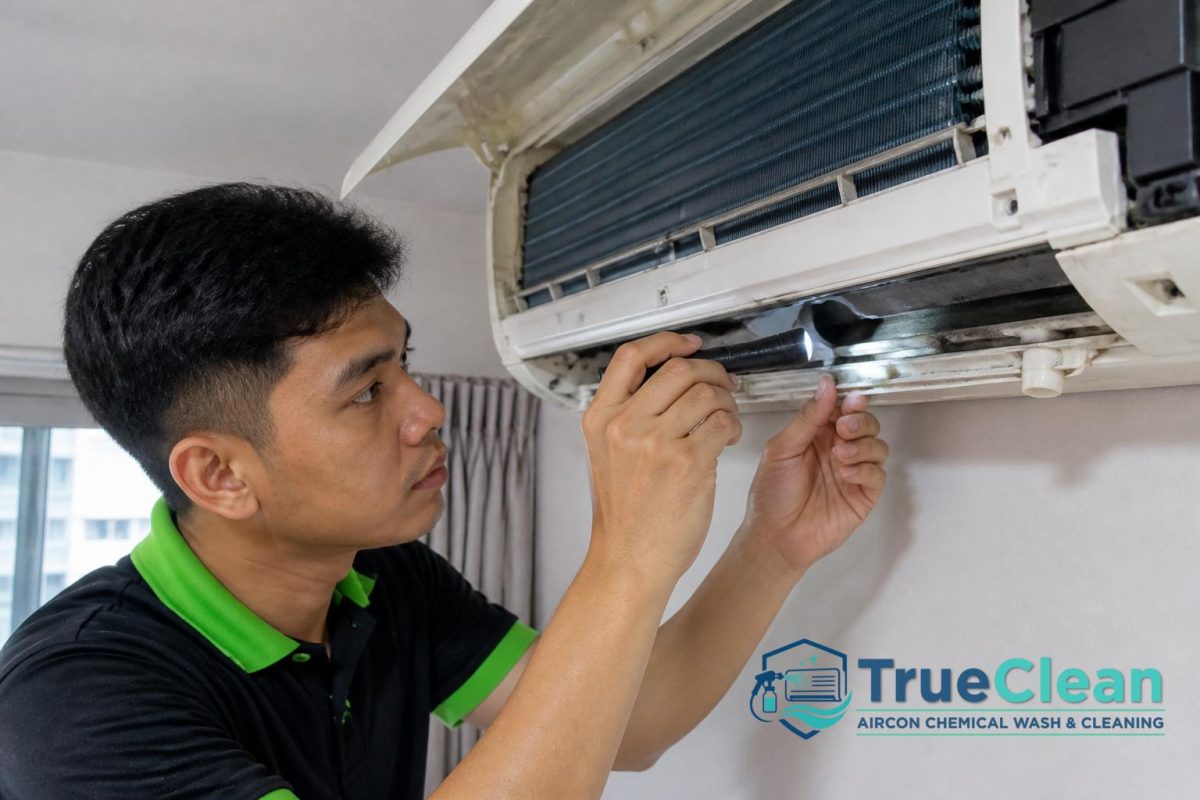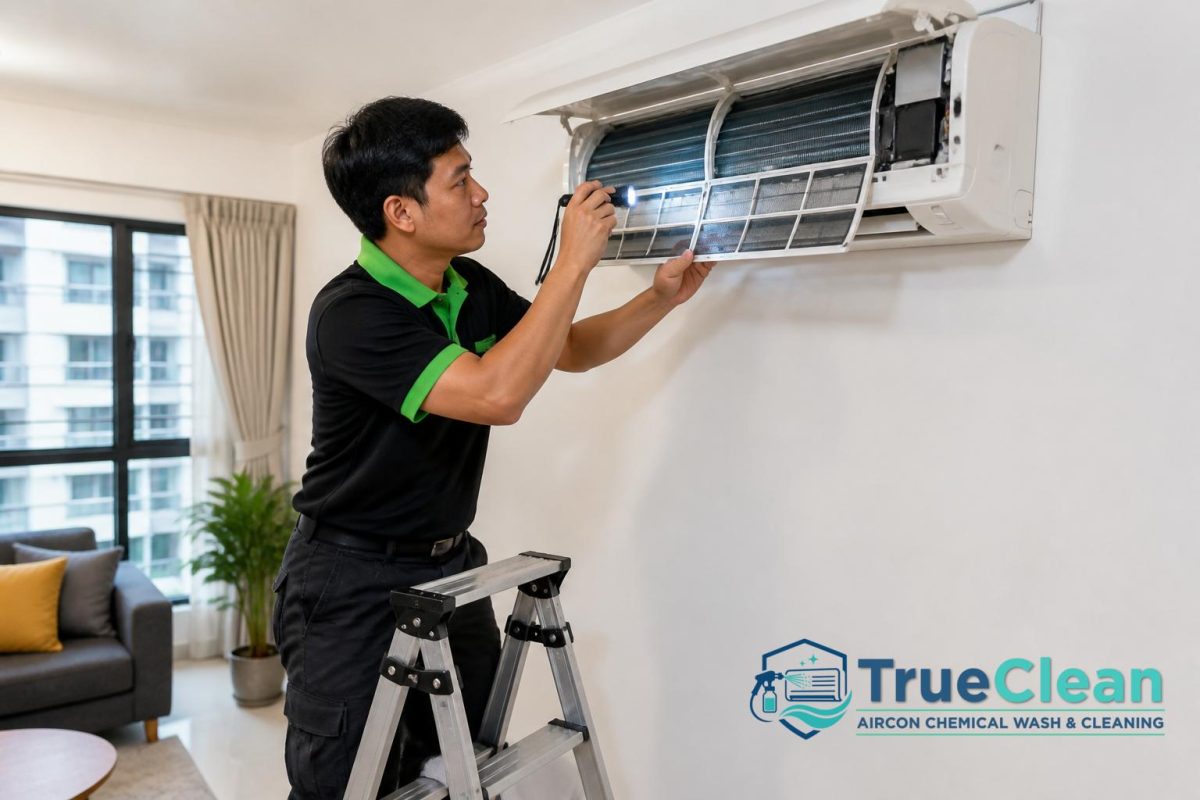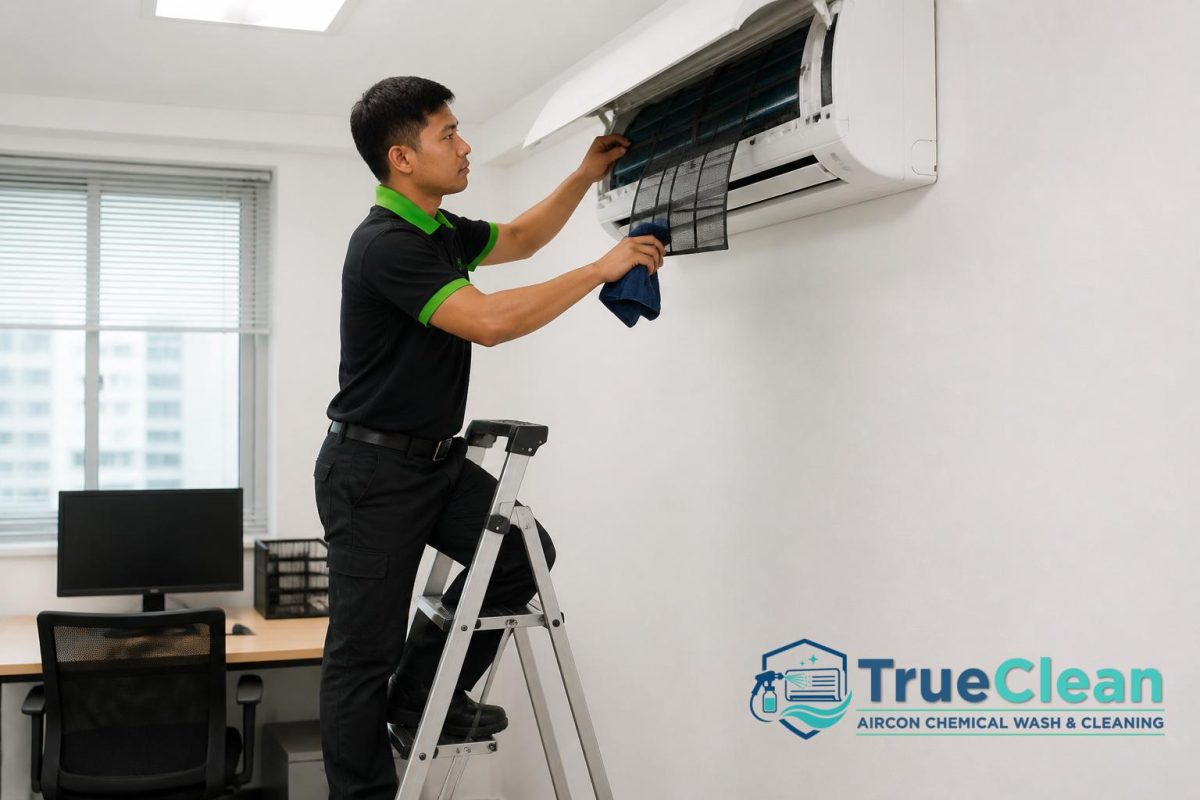


During an aircon chemical overhaul, the indoor unit is stripped down, cleaned more thoroughly than during a routine service, and inspected in a way that targets hidden dirt, grime and drainage issues. For many Singapore homeowners, the indoor unit is the main concern because it is where airflow, cooling performance and water drainage problems often start to show. Understanding what happens to this part of the system can help you judge whether an overhaul is suitable, especially when basic cleaning is no longer enough.
Why the indoor unit matters in a chemical overhaul
The indoor unit does most of the work you notice day to day: it draws in warm room air, cools it through the evaporator coil, and sends conditioned air back into the room. Because of this, dust, moisture and airborne particles tend to collect there over time. In Singapore’s humid climate, that build-up can happen quite quickly, especially in units that run for long hours.
A chemical overhaul focuses on the indoor unit because it contains several parts that are difficult to clean properly without partial dismantling. These include the coil, blower wheel, drain tray and surrounding housing. The aim is not simply to wipe surfaces, but to expose areas where dirt and residue may have settled and clean them more thoroughly.
What is removed from the indoor unit
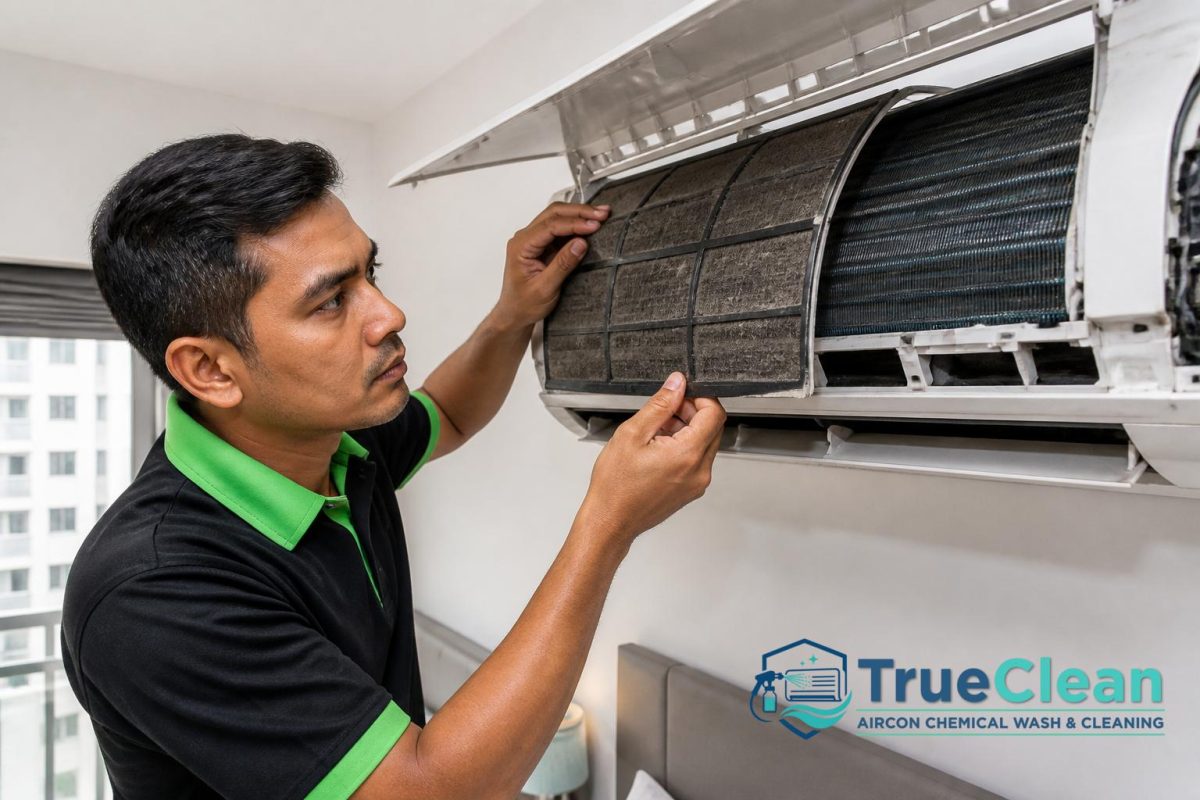
In a typical chemical overhaul, the technician will open up the indoor fan coil assembly and remove key washable components. The exact steps depend on the model and condition of the aircon, but the process usually involves taking out parts such as the filters, front cover, drain tray and blower-related components where access is needed for proper cleaning.
This deeper access is important because many of the deposits inside the indoor unit are not visible from the outside. A unit may look acceptable from the front grille, yet still have dirt on the coil fins, mouldy residue in the drain path or dust on the blower wheel that affects airflow. Removing components allows the cleaner to reach these hidden areas safely and more effectively.
How the evaporator coil is treated
The evaporator coil is one of the most sensitive parts of the indoor unit. During an overhaul, it is typically protected and cleaned with suitable chemical solutions designed for aircon components. The purpose is to loosen dirt and residue that cling to the fins, so the coil can transfer heat more efficiently once reassembled.
It is important to note that a chemical overhaul is not about aggressive scrubbing. The coil fins are delicate, and harsh handling can bend them or reduce performance. A careful technician will use appropriate tools and cleaning methods to remove build-up while keeping the coil structure intact. This is one reason why chemical overhauls are more thorough than routine aircon servicing.
What happens to the blower wheel and air path
The blower wheel plays a major role in moving air through the indoor unit and into the room. Over time, dust and sticky residue can accumulate on the blades, especially if the unit is used frequently or the room has more airborne particles. During a chemical overhaul, the blower wheel is usually cleaned separately once it has been made accessible.
Cleaning this component matters because deposits on the wheel can reduce airflow and create uneven performance. It can also contribute to noise if the wheel becomes unbalanced from dirt build-up. Along with the blower wheel, the air path inside the unit is cleared so that air can move more freely through the system after reassembly.
Drain tray and drainage checks during the process
The indoor unit’s drain tray collects condensation before water flows out through the drainage pipe. If the tray is dirty or blocked, water may start to leak from the unit or drain more slowly than it should. This is one of the most common reasons Singapore residents consider a chemical overhaul instead of standard cleaning.
During the overhaul, the drain tray is cleaned and the drainage route is checked for obstruction. This does not mean every drainage problem will be fully solved by cleaning alone, but it does help identify whether the issue is due to build-up, partial blockage or another underlying fault. If needed, the technician can then advise whether further attention is required.
What the technician usually inspects while the indoor unit is open
Once the indoor unit is dismantled, the technician can inspect parts that are difficult to assess during a regular visit. This often includes checking for visible dirt on the coil, signs of blocked drainage, corrosion around fittings, worn insulation or unusual wear on accessible parts. The inspection helps determine whether the unit can be restored through cleaning or whether additional repair work may be worth discussing.
For homeowners and landlords, this is useful because it gives a clearer picture of the unit’s condition. A chemical overhaul is not only about washing parts; it also provides a better opportunity to spot issues that may not be obvious when the aircon is operating normally. That said, the service should still be understood as a cleaning and restoration process, not a guarantee of fixing every fault.
How the indoor unit is put back together
After cleaning, the indoor unit is dried, reassembled and checked again before testing. Correct reassembly matters because the indoor unit has to sit properly for airflow, drainage and operation to remain stable. Components must be fitted back in the right position, and the drain line and housing should be secured so the unit can run as expected.
A proper final check usually includes testing cooling performance, airflow and water drainage after the unit is reinstalled. This step helps confirm that the overhaul has been completed sensibly and that no obvious issue was introduced during the dismantling and cleaning process. It is also the point where the technician can note any remaining concerns if the unit is older or heavily worn.
When an indoor unit may need an overhaul instead of routine cleaning
Not every aircon needs a chemical overhaul. In many cases, routine servicing or chemical cleaning may be sufficient. However, an indoor unit may benefit more from an overhaul if it has persistent drainage trouble, heavy dirt build-up, weak airflow, recurring odour issues or signs that previous cleaning has not restored performance adequately.
For Singapore households, the decision often depends on usage and condition. Units in bedrooms, living rooms, rental properties or homes that run the aircon daily may accumulate dirt faster. If the unit has not been properly cleaned for a long period, a deeper indoor-unit service can be more practical than repeated light cleaning.
If you are unsure whether your indoor unit needs a chemical overhaul or a less intensive service, you can WhatsApp TrueClean Aircon Chemical Wash & Cleaning Singapore to discuss the exact condition of your unit, the service scope, property type, number of units and preferred schedule: message us here.
Conclusion
During an aircon chemical overhaul, the indoor unit is carefully dismantled, cleaned and reassembled so that hidden dirt, residue and drainage issues can be addressed more thoroughly than in routine servicing. The process centres on the coil, blower wheel, drain tray and other accessible parts inside the unit, with the aim of restoring better cleanliness and allowing the system to operate more smoothly. For Singapore owners and landlords, understanding these steps makes it easier to decide when this service is appropriate and what to expect from it.
Choose TrueClean Aircon Chemical Wash & Cleaning Singapore
TrueClean Aircon Chemical Wash & Cleaning Singapore is a dedicated aircon cleaning specialist focused on helping homeowners maintain cleaner and better-performing air conditioning systems. With a strong emphasis on aircon chemical wash, aircon chemical cleaning, and aircon chemical overhaul services, we provide deep cleaning solutions designed to address the buildup of dirt, dust, mould, and bacteria within aircon units. Our goal is to help customers restore cooling performance, improve airflow, and keep their air conditioning systems operating more efficiently.
In addition to specialised chemical cleaning services, TrueClean Aircon also provides aircon servicing, aircon maintenance, and aircon cleaning solutions for a wide range of residential air conditioning systems. Whether you require regular upkeep or a more intensive cleaning service, our team is committed to delivering professional workmanship, honest recommendations, and reliable service. By focusing on proper diagnosis and suitable maintenance solutions, we aim to help customers keep their air conditioning systems in good condition throughout the year. WhatsApp us at +65 8241 0032 today!
Frequently Asked Questions
Is the indoor unit fully removed during a chemical overhaul?
Not usually as a complete wall-mounted unit. The indoor assembly is typically opened up and partially dismantled so key internal parts can be cleaned properly. The extent of dismantling depends on the aircon model and the technician’s method.
Will a chemical overhaul always stop water leakage from the indoor unit?
It can help if the leakage is caused by dirt, sludge or a blocked drain path, but it will not solve every possible cause. If there is a damaged part, poor installation or another fault, further work may still be needed.
How is this different from routine aircon servicing?
Routine servicing is generally lighter and may involve basic cleaning of accessible parts, checking operation and clearing surface dirt. A chemical overhaul goes deeper into the indoor unit and is usually chosen when build-up or drainage problems need more thorough attention.