

Aircon servicing in Singapore is usually a structured, step-by-step process that begins with a basic assessment of the unit and ends with performance testing after the work is completed. For homeowners, landlords and property managers, understanding this workflow makes it easier to know what a technician is checking, why certain tasks are carried out, and how routine servicing supports dependable day-to-day cooling in Singapore’s humid climate.
What happens before servicing begins
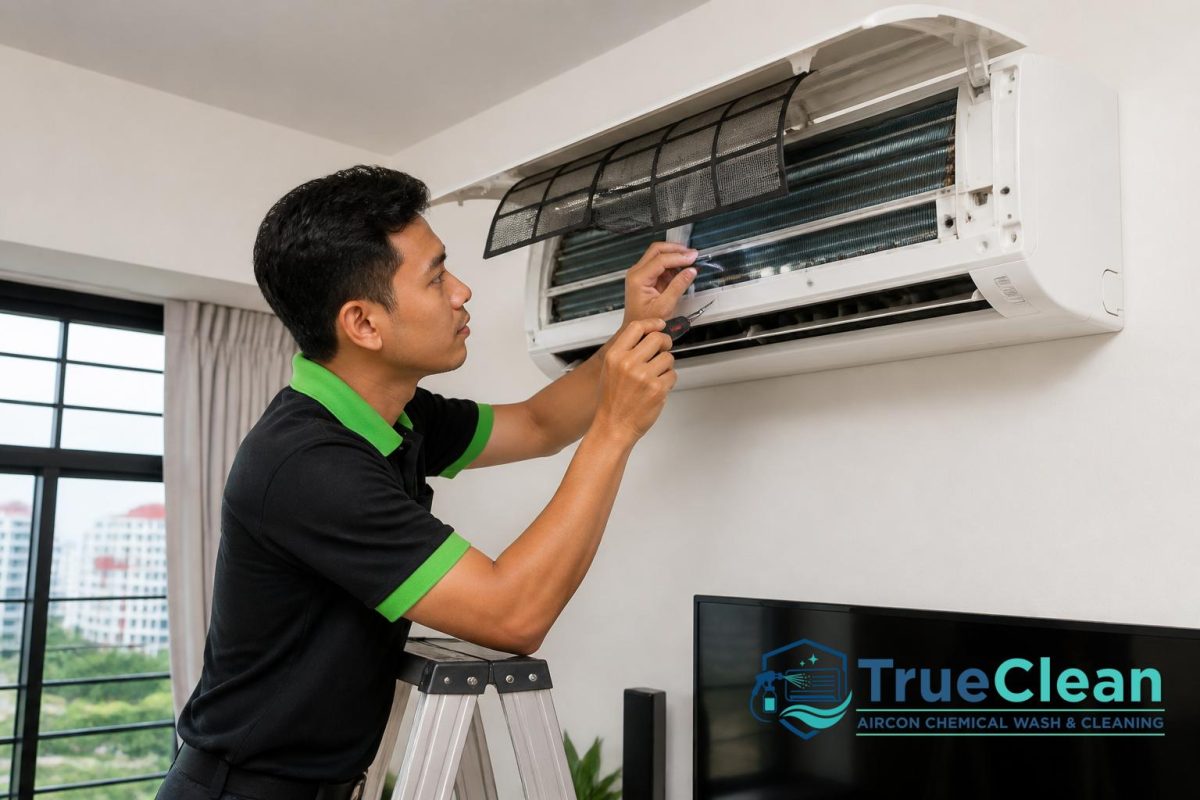
A proper service visit normally starts with a visual inspection of the indoor unit, and sometimes the outdoor unit if access is part of the agreed scope. The technician may look for obvious signs such as dust build-up, water leakage, unusual noise, weak airflow or blocked drainage. This early check helps identify whether the job is a routine maintenance visit, a more detailed cleaning job or a case that may need further attention.
At this stage, the technician will also confirm the condition of the unit and the service scope. In Singapore homes, this is particularly useful because aircon systems can differ by property type, number of units and how often they are used. A clear inspection prevents unnecessary work and ensures the servicing is matched to the actual condition of the aircon.
Understanding the indoor unit check
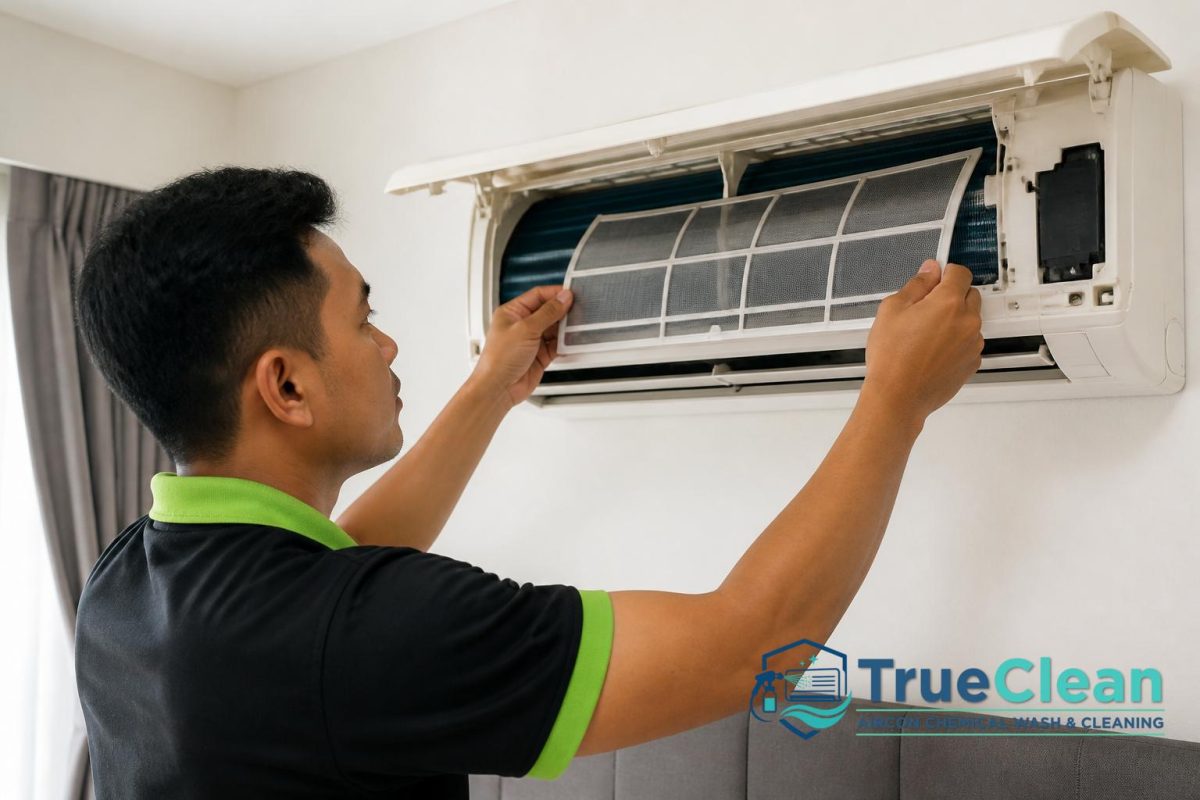
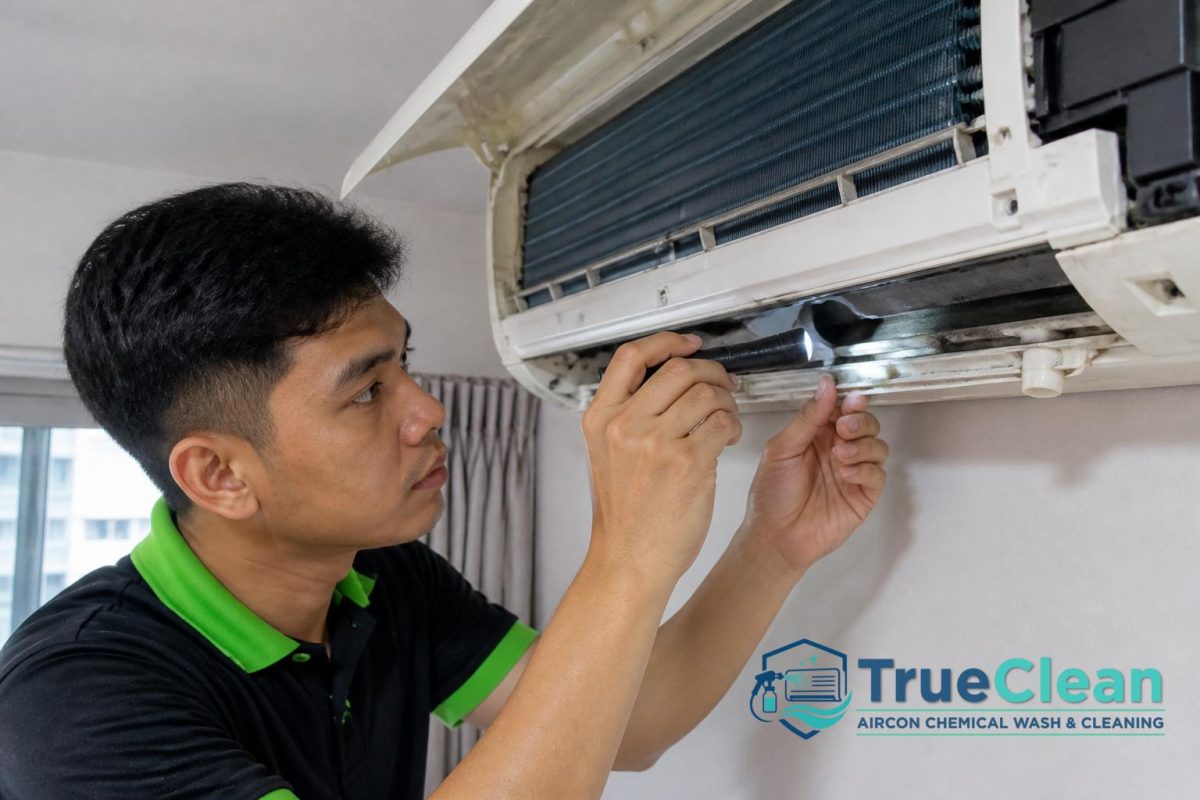
The indoor fan coil unit is usually the main focus of routine servicing. The technician may open the cover, check the filters, inspect the evaporator coil, observe the blower area and examine the drainage tray. These parts commonly collect dust and moisture over time, especially in air-conditioned rooms that are used daily.
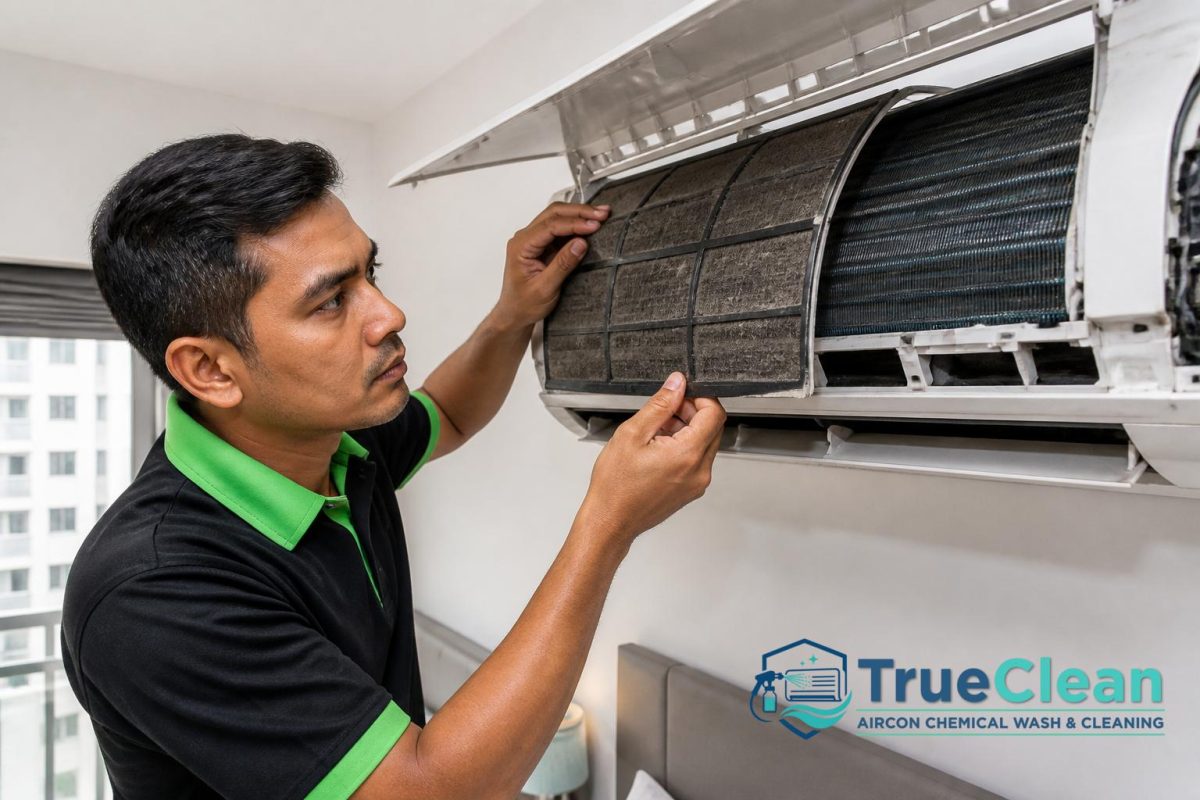
This inspection is not just about appearance. It also helps the technician understand whether airflow is restricted, whether water is draining correctly and whether there are signs that the unit may need more than a standard service. For example, heavy dirt on the filters may suggest that cleaning has been overdue, while poor drainage may explain water dripping from the indoor unit.
Cleaning the parts that affect airflow
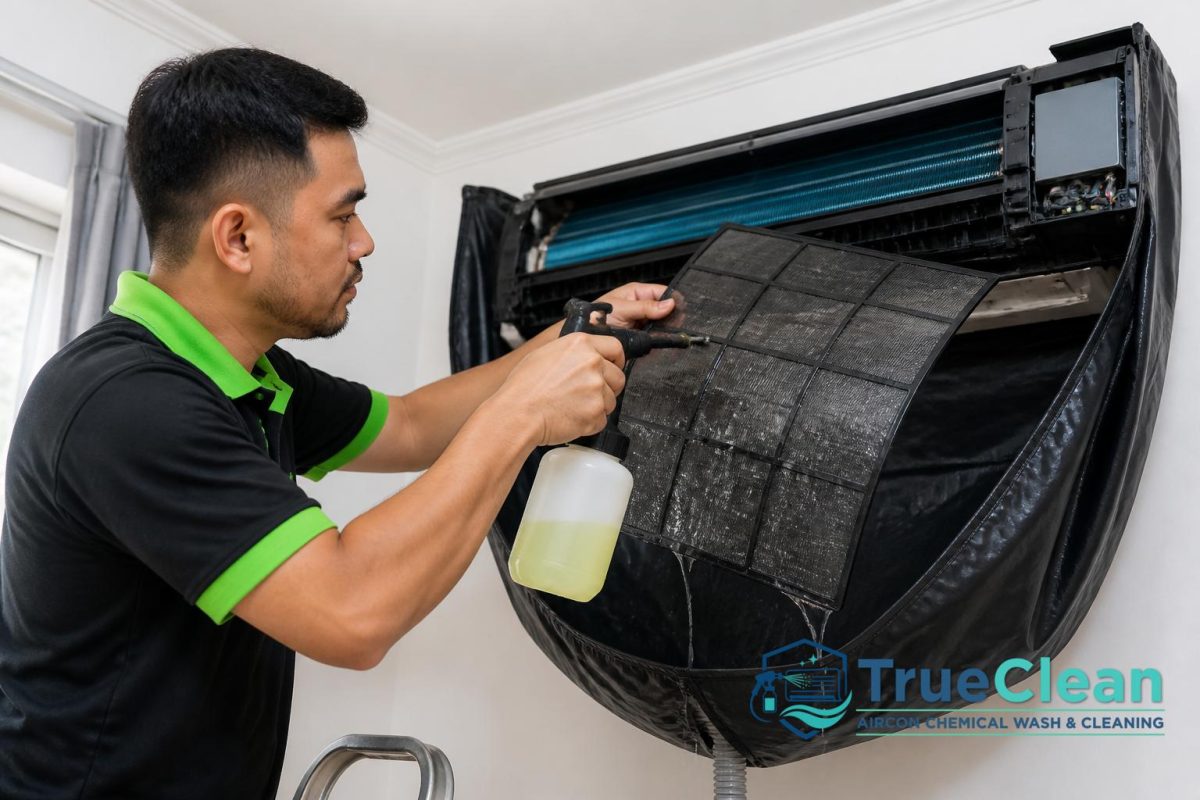
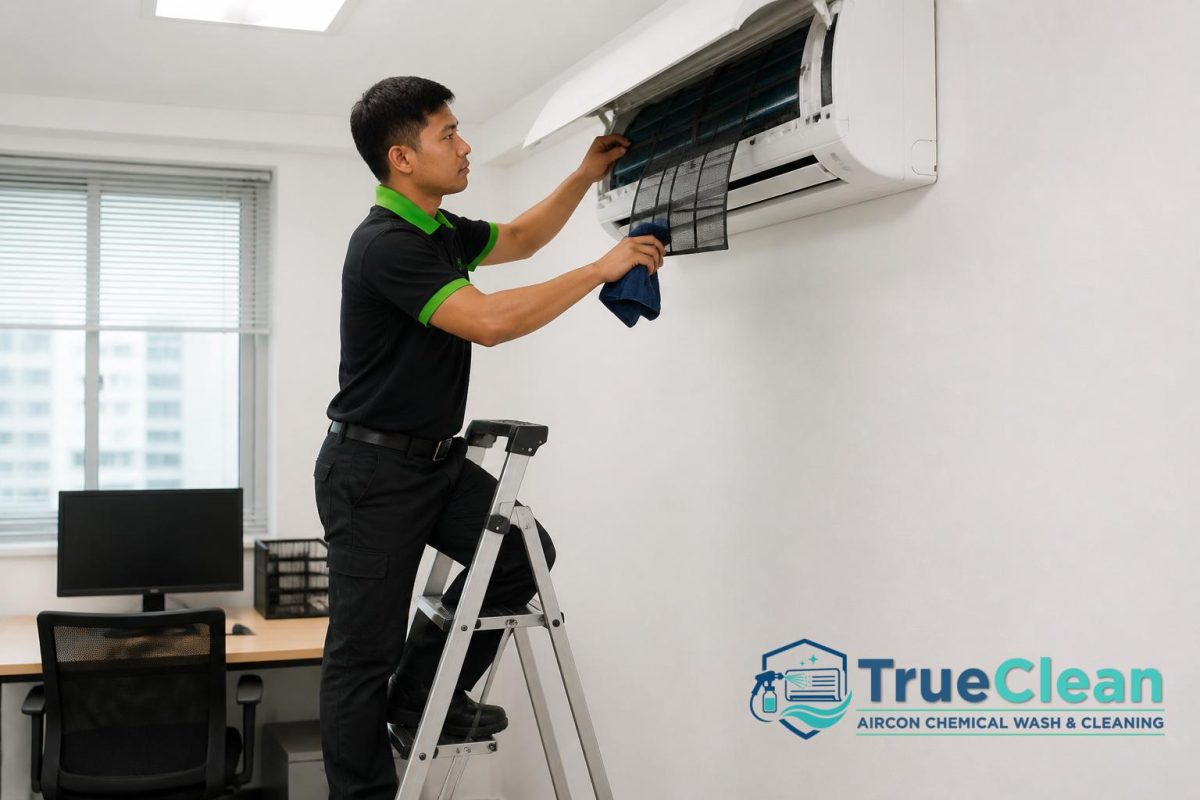
Once the condition has been checked, the service usually moves into cleaning the accessible components that influence airflow and basic hygiene. This often includes the air filters, cover panels and surrounding areas of the indoor unit. Clean filters allow air to pass through more freely, while a clean housing reduces the chance of dust being recirculated into the room.
Depending on the service package and unit condition, the technician may also clean the evaporator coil and blower area using suitable tools and cleaning methods. The aim is to remove dust and grime that can affect performance, without overcomplicating the job. For routine servicing, this step is about maintaining the system rather than dismantling it extensively.
Checking drainage and moisture flow
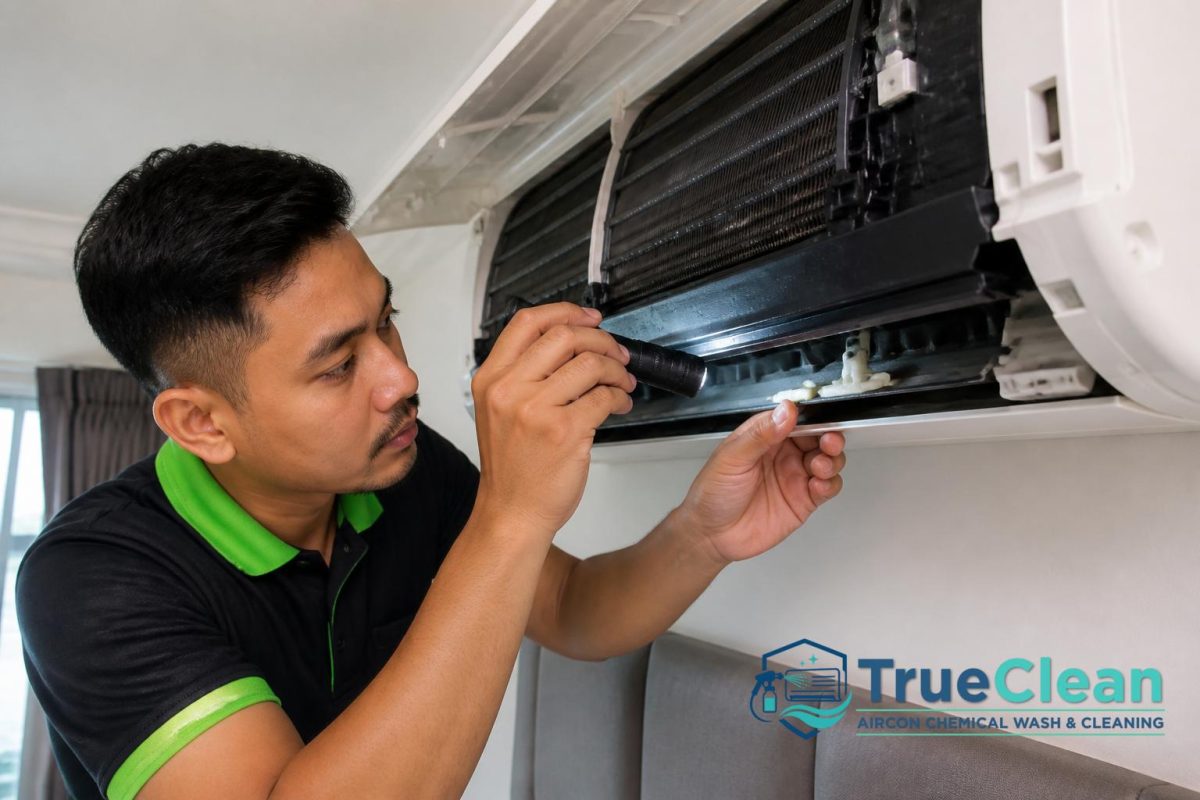
Drainage is one of the most important parts of aircon servicing in Singapore, because the climate naturally creates condensation during cooling. If the drain line is partially blocked or the tray is dirty, water can collect and cause dripping, staining or an unpleasant smell. A technician will normally check whether water is flowing away properly from the unit.
If needed, the drain pipe may be flushed to help restore smooth drainage. This is a practical part of the service because it reduces the risk of water-related issues that often appear during everyday use. In many homes, drainage checks are just as important as surface cleaning, since a well-running aircon should remove moisture efficiently.
Inspecting electrical and mechanical condition
Routine servicing also includes a basic check of the unit’s operational condition. A technician may observe the fan operation, listen for unusual sounds and look at whether the system responds normally when switched on. The purpose is not to perform repairs unless they are part of the agreed job, but to note whether anything appears out of the ordinary.
This part of the process is helpful for catching early signs of wear. For instance, weak airflow, irregular noises or inconsistent operation may suggest that the unit needs closer attention. In a professional service, these observations are usually explained clearly so the customer understands whether the system is functioning normally or whether follow-up work should be considered.
Reassembly and tidying up after the service
After cleaning and inspection, the technician will reassemble the unit carefully, making sure the panels, filters and other components are returned to their proper positions. This step matters because a poorly fitted cover or filter can affect airflow and the overall finish of the job. Clean servicing should leave the unit neat, secure and ready for use.
A tidy finish is also part of good workmanship. The surrounding area should be left reasonably clean, with wastewater and debris removed as part of the service process. For many Singapore households, this is one of the practical signs that the servicing has been handled properly and with attention to detail.
Why performance testing matters after servicing
Performance testing is the final stage and helps confirm whether the aircon is operating as expected after the service. The technician may switch on the unit, check the cooling response, observe airflow and ensure the system is running smoothly. This is an important quality check because it links the servicing work to the unit’s actual operation.
Performance testing does not mean every issue is solved instantly, but it does show whether the unit is cooling properly, whether the airflow feels steady and whether any obvious concerns remain. If something still looks irregular, the technician can advise whether it may require further inspection or a different service approach.
How servicing differs from deeper cleaning work
It is useful to distinguish routine aircon servicing from deeper cleaning services. Servicing usually focuses on inspection, basic cleaning, drainage checks and operational testing. It is designed to maintain a unit that is still generally functioning and does not necessarily involve a full strip-down of components.
If a system is heavily soiled, leaking repeatedly or showing persistent performance issues, a more intensive service may be more suitable. However, routine servicing remains the first line of maintenance for many Singapore homes because it helps keep the unit in usable condition and provides a clear picture of its current state.
What customers should expect during a visit
For most homeowners and landlords, a servicing appointment should feel organised and straightforward. The technician should explain what is being checked, carry out the agreed work and mention any observations that may be relevant to the unit’s condition. Good service is transparent, practical and focused on the actual condition of the aircon rather than offering unnecessary extras.
It also helps to share details such as the number of units, property type, access conditions and any symptoms you have noticed before the visit. This allows the servicing to be planned more accurately and helps the technician work efficiently, especially in Singapore where appointments are often scheduled tightly around residents’ routines.
If you would like to arrange aircon servicing, you can WhatsApp TrueClean Aircon Chemical Wash & Cleaning Singapore to discuss the unit condition, service scope, property type, number of units and preferred schedule before requesting a quotation: send an enquiry on WhatsApp.
Conclusion
Aircon servicing in Singapore is best understood as a practical workflow: inspect the unit, clean the key components, check drainage and operating condition, then test performance at the end. When done properly, the process gives customers a clear picture of their aircon’s condition and helps keep the system running as expected in a demanding local climate. For households and property owners, knowing this sequence makes it easier to choose the right service and recognise quality workmanship.
Choose TrueClean Aircon Chemical Wash & Cleaning Singapore
TrueClean Aircon Chemical Wash & Cleaning Singapore is a dedicated aircon cleaning specialist focused on helping homeowners maintain cleaner and better-performing air conditioning systems. With a strong emphasis on aircon chemical wash, aircon chemical cleaning, and aircon chemical overhaul services, we provide deep cleaning solutions designed to address the buildup of dirt, dust, mould, and bacteria within aircon units. Our goal is to help customers restore cooling performance, improve airflow, and keep their air conditioning systems operating more efficiently.
In addition to specialised chemical cleaning services, TrueClean Aircon also provides aircon servicing, aircon maintenance, and aircon cleaning solutions for a wide range of residential air conditioning systems. Whether you require regular upkeep or a more intensive cleaning service, our team is committed to delivering professional workmanship, honest recommendations, and reliable service. By focusing on proper diagnosis and suitable maintenance solutions, we aim to help customers keep their air conditioning systems in good condition throughout the year. WhatsApp us at +65 8241 0032 today!
Frequently Asked Questions
How long does a typical aircon servicing appointment take?
The time needed depends on the number of units, access to the system and how much cleaning is required. A straightforward routine service is usually quicker than a visit involving heavier dirt build-up or additional checks.
What signs suggest my aircon needs servicing?
Common signs include weaker airflow, reduced cooling, water dripping from the unit, unusual odours, visible dust build-up and louder-than-usual operation. These issues often indicate that the system would benefit from inspection and cleaning.
Does servicing always include performance testing?
It should. Performance testing is an important final step because it helps confirm that the aircon is cooling and operating normally after the service has been completed.